
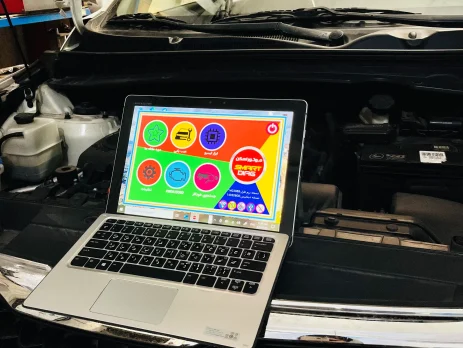
What is a Car Diagnostic Scanner?
Car Diagnostic Scanner: What It Is, How It Works, and How to Choose the Right One
This device connects to the OBD2 port (On-Board Diagnostics port), which is available in most modern vehicles. By scanning various vehicle systems such as the engine, braking system, electrical system, and others, it provides detailed information about the vehicle’s condition.
Using a diagnostic scanner, mechanics can view error codes from different vehicle systems and obtain the necessary information for accurate problem diagnosis. This information includes detailed data about various components, such as sensors, electrical systems, and the performance of different parts.
How Does a Diagnostic Scanner Identify Vehicle Issues?
A car diagnostic scanner can accurately and quickly detect various vehicle faults. But how does it work? The process involves several precise yet effective steps:
1. Connecting to the OBD2 Port:
Most modern vehicles have an OBD2 port that allows the diagnostic scanner to connect to the vehicle’s electronic and computer systems. The OBD2 port is usually located under the dashboard near the steering wheel.
2. Scanning Various Vehicle Systems:
Once connected, the scanner examines all the electronic and mechanical systems in the vehicle. These systems include the engine, brakes, fuel injection, ABS (anti-lock braking system), safety and airbag systems, as well as other electrical and electronic systems.
3. Reading Error Codes:
After scanning, the device retrieves Diagnostic Trouble Codes (DTCs) from various vehicle systems. These codes provide precise information about the type and location of the problem. For example, a code may indicate a faulty oxygen sensor or an issue in the fuel injection system.
4. Interpreting Error Codes:
The scanner not only identifies error codes but also provides explanations for each code. Using this information, the mechanic can accurately diagnose the issue and choose the correct repair method.
5. Detecting Issues in Complex Systems:
Diagnostic scanners can identify problems in complex systems such as engine control modules and electrical systems, which are difficult to detect using traditional methods. This includes issues that require detailed analysis and cannot be easily identified manually.
Why Every Mechanic Needs a Diagnostic Scanner
1. Faster Problem Detection:
One of the main advantages of a diagnostic scanner is that it allows mechanics to identify problems in the shortest possible time. Unlike traditional trial-and-error methods, a scanner provides error codes quickly and accurately, enabling rapid diagnosis and repair.
2. Higher Accuracy in Repairs:
The scanner provides precise detection of vehicle issues. For instance, if there is a problem in the fuel injection system, the scanner pinpoints the exact component causing the issue. This helps mechanics perform repairs with minimal errors and prevent further problems.
3. Time and Cost Savings:
By enabling faster and more accurate problem detection, the scanner reduces lengthy and costly inspections. This allows mechanics to complete more repairs in less time, lowering costs for customers.
4. Capability to Check Complex Systems:
Modern vehicles contain complex electronic systems that can develop issues difficult to detect without specialized tools. A diagnostic scanner allows mechanics to identify problems in these systems quickly, without disassembling parts.
5. Accurate Vehicle Status Reporting:
Diagnostic scanners typically provide detailed reports on the vehicle’s current condition, including error codes, maintenance history, and system performance. This information helps mechanics plan future repairs and anticipate potential issues.
The Importance of Diagnostic Scanners in Improving Repair Services
Using a diagnostic scanner not only speeds up repairs but also significantly increases repair accuracy and quality. Mechanics using scanners can provide better services to customers, enhancing their reputation and credibility.
By identifying problems before they escalate, scanners help ensure vehicles are repaired faster and prevent more complex breakdowns.
Difference Between Diagnostic Scanners and Traditional Methods
Traditional methods for diagnosing vehicle issues involved disassembling parts, checking components manually, and using handheld tools. These methods were time-consuming and less accurate. For example, identifying engine or electrical system problems required manual inspection of multiple components.
With a diagnostic scanner, information is provided digitally and accurately, allowing mechanics to identify issues without removing parts.
How to Choose the Right Diagnostic Scanner
When selecting a diagnostic scanner, several factors should be considered, including the types of vehicles supported, the scanner’s capabilities, and its price.
The most important aspect is matching the scanner to the mechanic’s needs. For example, if a mechanic works on multiple car brands, they should choose a scanner that supports all those brands. Additionally, the device should offer features such as online updates, the ability to check multiple vehicle systems, and an intuitive user interface
Take your car diagnostics to the next level with Smart Diag – the ultimate tool for quickly identifying engine issues, reading error codes, and monitoring vehicle systems in real time. Discover why mechanics trust Smart Diag for faster, more accurate repairs and experience the future of automotive diagnostics today

Leave a Reply